

How to Build Backlinks in 2026: 15 Safe Strategies That Still Work
Key takeaways
- You build backlinks by creating pages that are worth citing and putting them in front of the people who link in your niche.
- A high quality backlink is a link from a trusted website in your field that a real person added because your page helps their readers.
- Most people searching how to build backlinks want a shortcut and there is no safe one.
- Nobody wants to link to a slow page or a thin one.
You publish a page you are proud of and it sits on page three of Google for months. The content is solid and the site works well. Very often the missing piece is trust from other websites in the form of links.
Link building has changed a lot in the last two years. Google released three spam updates in 2026 alone and its systems now ignore most spammy links. Brand mentions across the web also appear to shape what AI tools like ChatGPT and Google AI Overviews recommend. Cheap link packages and mass guest posts now waste money or put your site at risk.
This guide explains what makes a backlink high quality and walks through 15 strategies that still earn links in 2026. You will get simple steps, outreach templates, a quality checklist and a 90-day plan. You will also see how the same work helps your brand show up in AI answers.
How Do You Build Backlinks?
You build backlinks by creating pages that are worth citing and putting them in front of the people who link in your niche. Fix your site first and study who links to your competitors. Then earn links through useful content, digital PR, guest posts, broken link fixes and partner sites. Never buy links that pass ranking credit.
Key Takeaways
Relevance and trust matter far more than the number of links
The strongest links come from content worth citing plus targeted outreach
Google's spam policy covers paid links, link schemes and attempts to game AI answers
Brand mentions on news sites and YouTube line up closely with AI visibility
Most new links take about 1 to 3 months to move rankings
What Are High Quality Backlinks?
A high quality backlink is a link from a trusted website in your field that a real person added because your page helps their readers. It sits inside the main content and sends real visitors. One link like this can do more for your rankings than hundreds of links from weak or spammy sites.
A backlink is simply a link on another website that points to yours. Google uses links to find new pages and to judge how relevant a page is so each good link works like a vote of trust. Learning how to build backlinks starts with knowing which votes count and which ones Google throws away.
Signs of a High Quality Backlink
Relevance: The linking site covers your topic or serves the same buyers
Editorial choice: A writer or editor chose to link and nobody paid for it
Placement: The link sits inside the body text and not in a footer or sidebar
Trusted source: The site has real authors and steady traffic and does not sell links
Natural anchor text: The clickable words are your brand name or a plain description of the page
Real clicks: Readers actually follow the link to your site
Indexed page: The page that links to you shows up in Google
Common Types of Backlinks
Editorial links: A writer cites your page inside an article because it helps their readers
Guest post links: A link in an article or author bio you wrote for another site
Resource page links: A spot on a curated list of tools, guides or providers
PR and news links: Coverage from journalists who quote you or use your data
Partner links: Clients, suppliers or software companies that feature you
Profile and directory links: Business listings and social profiles that are usually nofollow
User-generated links: Links in forums, comments or Q&A posts that sites mark as ugc
Do Backlinks Still Matter in 2026?
Yes. Backlinks still help Google find your pages and decide which ones deserve to rank for competitive searches. What changed is how many you need. Google now needs fewer links than before and quietly ignores most spammy ones so quality now beats volume.
Google's Gary Illyes said in 2024 that Google needs very few links to rank pages and that links have become less important over the years. That does not mean you can skip them. In busy markets the top pages still tend to have more trusted sites pointing at them. Links are only one part of the picture and our guide on ranking on the first page of Google in 2026 covers the content and technical side.
What Backlinks Do for Your Website
Rankings: Trusted links help a page compete for searches with many strong results
Discovery: Google finds new pages faster when known sites link to them
Link equity: Part of the linking page's strength flows to yours and the idea goes back to Google's original PageRank formula
Referral traffic: Readers click through and some of them become leads
Brand trust: Mentions on known sites build recognition with people and AI tools
What the Research Says
A 2023 Ahrefs study of about 14 billion pages found that 96.55% of pages get no traffic from Google and named a lack of backlinks as one of the main reasons
The same study found that pages with more linking websites tend to get more search traffic
A 2025 Ahrefs study of 75,000 brands found that brand mentions across the web correlated with AI Overview visibility at 0.664 while backlinks scored 0.218
Google released spam updates in March, June and August 2026 and none of them came with new policies so the existing link rules still apply
These numbers show correlation and not cause but they point the same way. Links help pages rank while brand mentions carry extra weight in AI answers.
How to Build Backlinks Step by Step
Most people searching how to build backlinks want a shortcut and there is no safe one. Some links you place yourself such as business profiles. Others you win through outreach. The strongest ones arrive on their own because your content is worth citing. Paid links stay safe only when they are marked as sponsored.
The method that works is to give other sites a real reason to cite you and then make sure the right people see it. Follow the steps below in order and use the 15 strategies further down to fill each one.
The 8 Steps at a Glance
Fix your own site so your pages deserve links
Find link gaps by studying who links to your competitors
Create one asset that people want to cite
Pitch journalists and answer expert requests
Write guest posts for sites your buyers already read
Fix broken links and reclaim lost mentions
Earn local and industry links plus mentions that AI tools notice
Track results and repeat what works
Fix Your Own Site Before You Ask for Links
Nobody wants to link to a slow page or a thin one. Before any outreach make sure your best pages load fast on a phone and answer the question better than the pages already ranking. Also fix pages that return an error but still have links pointing to them since those links do nothing until you redirect them.
Internal links matter here too. When one page earns a backlink you can pass some of that value to related pages by linking to them from its content. A quick website SEO audit shows the broken pages and speed problems worth fixing first.
Pre-Outreach Checklist
Key pages load fast on mobile with LCP at 2.5 seconds or less
Each page you plan to pitch answers its topic better than the current top results
Old URLs that still have backlinks redirect to the closest live page with a 301
Your About page names real people and shows how to contact you
Your site uses HTTPS and shows a real address, phone number or email
The pages you want links for are indexed in Google Search Console
Related pages link to each other so link value spreads across the site
15 Ways to Build Backlinks in 2026
These are the strategies that still earn links safely in 2026. They run from quick wins to bigger campaigns. Pick three that fit your business and do them well before you add more.
The 15 Strategies at a Glance
Claim business profiles and trusted directory listings
Find link gaps in your competitors' backlinks
Create linkable assets people want to cite
Publish data pages that writers find on their own
Earn links through digital PR and expert quotes
Newsjack trending stories in your niche
Write guest posts the safe way
Get listed on resource pages and "best of" lists
Win links with broken link building
Reclaim lost links, unlinked mentions and image credits
Turn partners, suppliers and tools you use into links
Speak on podcasts, webinars and events
Build local and industry links
Earn brand mentions where AI tools look
Promote your content where linkers spend time
1. Claim Business Profiles and Trusted Directory Listings
Profile and directory links are the basic listings every real business should have. Most of them are nofollow so they do little for rankings on their own. They still help Google and AI tools confirm who you are and they send a small amount of referral traffic. Set them up once in your first week and then move on to strategies that earn stronger links.
Profiles and Listings Worth Claiming
Google Business Profile and Bing Places for Business
A LinkedIn company page plus your founders' profiles
Crunchbase and a review profile on Clutch, G2 or Trustpilot
Trusted local directories such as Justdial in India or Yelp in the US
YouTube, Instagram and X profiles with your website in the bio
App store or marketplace listings if you sell software or products
2. Find Link Gaps in Your Competitors' Backlinks
Your competitors have already shown you which sites link to businesses like yours. A link gap is a site that links to two or more of your competitors but not to you. These sites already cover your topic so they are far easier to win than random targets. If three rival roofing companies all appear on a local home improvement blog's list of contractors then that blog is your first pitch.
This search for link targets is called link prospecting. Backlink tools such as Ahrefs, Semrush and Moz have a link gap or link intersect report that finds these sites in seconds. Before a site goes on your list check how strong it is with a free domain authority checker.
How to Run a Link Gap Analysis
List five competitors that rank for your main keywords
Pull the sites that link to at least two of them
Remove spam sites, link farms and sites in unrelated niches
Note how each competitor earned the link such as a guest post, an expert quote or a resource list
Sort the list by relevance first and authority second
Plan the content or pitch that could earn you the same kind of link
3. Create Linkable Assets People Want to Cite
A linkable asset is a page built mainly to be referenced by other writers. Bloggers and journalists link to sources that save them work such as a fresh statistic, a free tool or a clear guide they can send readers to. One strong asset can keep earning links for years with very little outreach.
Original data works especially well. In Muck Rack's State of Journalism 2026 survey 40% of journalists named original data or research as one of the most valuable parts of a pitch. Tools work too. A loan advisor's free EMI calculator gives finance blogs something to link to every time they write about home loans. A steady content plan built around linkable assets keeps a new asset coming every quarter.
Linkable Asset Ideas That Earn Links
Original research: A short survey of your customers or industry with numbers nobody else has
Statistics pages: One page that gathers the key numbers in your niche with their sources
Free tools and calculators: Simple tools that solve one problem such as a cost or ROI estimate
Better versions of popular pages: Improve on a page that already has many links and show yours to the sites linking to the old one, which many SEOs call the skyscraper technique
Clear guides and glossaries: The page writers link to when they explain a basic term
Templates and checklists: Ready-to-use files that save readers an hour of work
Charts and visuals: Graphics with an embed code and a note that anyone can reuse them with credit
Case studies with real numbers: Results that others can quote as proof
4. Publish Data Pages That Writers Find on Their Own
Writers often search Google for a number to back up a point. A page that ranks for searches like "[your topic] statistics" or "[your topic] cost in 2026" collects links without any outreach. This is often called reverse outreach because the writers come to you instead of the other way round.
Keep the page updated with a visible date and cite every source. Find the searches writers use with a simple keyword research process and target the ones with steady demand.
What Makes a Data Page Earn Links
A clear title with the topic, the word statistics or data and the current year
A short summary at the top that answers the main question
One number per line with its source and date
Your own survey or client data wherever you can share it
Simple charts that are easy to screenshot or embed
A short note that shows people how to credit you
Fresh updates every few months so the year stays current
5. Earn Links Through Digital PR and Expert Quotes
Digital PR means getting your brand or your experts featured on news sites and industry blogs. These links are hard to fake which is why they carry real weight. They also create the kind of brand mentions that AI tools pick up.
Expert request services are the easiest way in. HARO came back in April 2025 under its new owner Featured.com as a free email of journalist requests. Qwoted and Source of Sources work in a similar way. Competition is tough though. Featured and its platforms including HARO received about 1.39 million pitches for 42,392 journalist requests between June 2025 and July 2026. That works out to roughly 33 pitches per request. Only about 1 in 10 fully AI-written pitches got picked compared with roughly 1 in 3 human ones.
How to Pitch Journalists the Right Way
Answer only requests where you have real experience
Reply quickly because writers on deadline pick from the first good answers
Open with a direct answer of one or two sentences the writer can quote
Add one specific number, example or lesson from your own work
Keep the pitch under 200 words since 69% of journalists in Muck Rack's 2026 survey prefer that length
Write it yourself because AI-written answers rarely get picked
Add your name, job title, company and a link to your bio
6. Newsjack Trending Stories in Your Niche
Newsjacking means adding expert value to a story people are already talking about. Speed matters most because reporters move on within days. A quick data point, a cost estimate or a clear expert view can earn links from news sites that would ignore a cold pitch.
Watch Google Trends, industry newsletters and social media for stories that touch your field. An accounting firm can publish a plain-language explainer within a day of a new tax rule and send it to the finance reporters covering the story.
How to Newsjack Without Looking Opportunistic
Set news alerts for your industry, your city and your main keywords
Pick stories where you have real expertise or data to add
Publish a short page with your insight within 24 to 48 hours
Pitch reporters who already covered the story and offer your new angle
Skip tragedies and sensitive news completely
7. Write Guest Posts the Safe Way
Guest posting still works when the goal is to reach a real audience. It turns into link spam when it becomes a large campaign of keyword-stuffed links. Google's spam policy names links with optimized anchor text in guest posts and press releases as one example.
Pick sites your buyers actually read and write something as good as your best post. Keep one natural link to a helpful page in the body or your author bio. Choose topics the host site's readers already search for and a free keyword research tool will show which ones have real demand.
Guest Post Rules That Keep You Safe
Pitch sites in your niche that have real readers and real comments
Skip sites that publish posts on every topic or sell "write for us" slots
Use your brand name or a plain phrase as the anchor text
Keep to one or two links that genuinely help the reader
Never pay for a post unless the link is marked sponsored or nofollow
Write each post for one site only and never spin it across many sites
8. Get Listed on Resource Pages and "Best Of" Lists
Resource pages are curated lists of useful tools, guides or providers. "Best of" lists rank products or services in a niche. Both exist to send readers somewhere useful so a strong page or product has a fair chance of being added. A project management app could pitch a "best free tools for small teams" list that already features its rivals.
These lists matter for AI search too. When people ask ChatGPT or Perplexity for a recommendation the answer often leans on comparison and "best of" articles.
How to Get Added to a List
Search for your topic with phrases like "useful resources" or "best tools" or use inurl:resources
Check that the list was updated in the last year and still links out
Make sure your page or product genuinely fits what the list covers
Email the editor with one line on why their readers would find you useful
Offer details they need such as pricing, a free trial or a short quote
9. Win Links With Broken Link Building
Broken link building means finding dead links on other sites and offering your page as a replacement. Site owners like it because you fix a problem on their site before you ask for anything.
There are plenty of dead links to work with. An Ahrefs study of more than 2 million domains found that at least 66.5% of links pointing to sites over a nine-year period were dead. Pew Research Center found that 38% of web pages that existed in 2013 could no longer be reached ten years later.
Your competitors' dead pages are another source. Look for pages on rival sites that now return a 404 but still have backlinks. Publish a better page on the same topic and tell the linking sites the old one is gone.
Broken Link Building in 5 Steps
Find resource pages and guides in your niche that link out to many sites
Scan them with a broken link checker or a browser extension
Look up what the dead page used to say in the Wayback Machine
Create or update a page on your site that covers the same need better
Email the site owner with the exact broken link and your replacement
10. Reclaim Lost Links, Unlinked Mentions and Image Credits
Some of the easiest links are ones you already earned. People mention your brand without linking, reuse your images without credit and links break when you move or delete pages. Fixing all three takes far less effort than winning new links.
Start with your own site. When we rebuilt our website in 2026 and cut it down to 93 pages Search Console kept flagging old URLs as 404 errors. The old URLs that still had backlinks are the ones to redirect first to the closest live page. Ongoing website upkeep catches these pages before the links go to waste.
How to Reclaim Links in 5 Steps
Set up Google Alerts for your brand, your founders and your product names
Find mentions that do not link to your site
Send a short thank-you note and ask if they would add a link for their readers
Run a reverse image search on your charts and photos and ask sites that use them without credit to add a source link
Check your backlink report each month for links that point to dead pages and redirect them
11. Turn Partners, Suppliers and Tools You Use Into Links
The businesses you already work with are some of the easiest links to win. Software companies feature customer stories, brands list the stores that stock them and agencies link to client case studies. These links are relevant by nature because the relationship is real.
A Shopify store that gets strong results from a reviews app can send the app maker a short testimonial with numbers. The app maker may then feature it on a customer page with a link. Only endorse tools you actually use and never swap links at scale.
Partner Link Ideas
Testimonials for software and services you use and like
Joint case studies with suppliers or technology partners
"Where to buy" pages from the brands you stock
Integration or marketplace listings if you build software
Client or partner pages that list the companies they work with
Co-hosted guides or webinars with a partner brand
12. Speak on Podcasts, Webinars and Events
Podcast hosts and event organisers publish guest pages, show notes and speaker bios that usually link to your site. One good interview can also lead to more invitations and press mentions. Video podcasts on YouTube add your brand to titles, descriptions and transcripts and that is the kind of footprint AI tools seem to notice.
How to Land Podcast and Speaking Spots
List the shows, webinars and events your buyers follow
Listen to an episode or two so your pitch fits the format
Pitch one specific topic with a story or result only you can share
Ask whether the show notes or speaker page include a link
Share the episode when it goes live so the host sees the value
13. Build Local and Industry Links
Local and industry links are often the most relevant links a small business can get. A plumber gains more from a link on the local chamber of commerce site than from a random tech blog. Google also says local prominence is based partly on how many websites link to your business and how many reviews you have.
Keep your business name, address and phone number the same everywhere you are listed. A free Google Business Profile audit shows the gaps in your listing before you start on local links.
Local and Industry Link Sources Worth Getting
Your chamber of commerce and local business groups
Trade associations and professional bodies in your field
Suppliers, manufacturers and partners who list where to buy
Local news sites that cover openings, events and milestones
Events and charities you sponsor with the link marked rel="sponsored"
Colleges where you hire interns or give guest talks
Industry directories that review every listing by hand
14. Earn Brand Mentions Where AI Tools Look
AI answers in ChatGPT, Perplexity and Google AI Mode draw on what the web says about you. That includes links and also plain brand mentions in articles, videos, forums and review sites. In a December 2025 Ahrefs study of 75,000 brands YouTube mentions had the strongest correlation with AI visibility at about 0.737. Ahrefs also found that Google's AI Mode and AI Overviews cite YouTube more than any other domain. It helps to appear in the same lists and articles as the best-known brands in your space too. Being named next to them is called co-citation and it can help people and AI tools see you as part of that group.
Google adds a warning. Its guide to generative AI search says chasing inauthentic mentions is not as helpful as it might seem. In May 2026 Google also made clear that its spam policies cover attempts to manipulate AI Overviews and AI Mode. So aim for real coverage that people would trust. Paid creator partnerships on YouTube and Instagram are fine when the video carries a clear sponsored label and any link uses rel="sponsored".
Mentions That Help AI Visibility
Reviews and tutorials about your product on YouTube from real creators
Places in "best of" lists and comparison articles in your niche
Helpful answers on Reddit and Quora from your team with the connection disclosed
Profiles and reviews on platforms like G2, Clutch, Trustpilot or Google
Quotes in news and industry articles through digital PR
Podcast interviews where hosts link to you in the show notes
The same business name, description and contact details on every profile
15. Promote Your Content Where Linkers Spend Time
A great page still needs to reach the people who write and link. Most links come from writers who find your page at the moment they need it so distribution is part of link building.
Share each new asset with your email list and on your team's own LinkedIn profiles. A small paid social budget can also put a new study in front of journalists and bloggers in your niche.
Promotion Channels That Lead to Links
Your email list and newsletter
LinkedIn posts and carousels from your team's personal profiles
Reddit, Slack and Facebook groups where you follow the rules and add value
Short YouTube or Instagram videos that explain the key finding
Thoughtful comments on posts by writers in your niche
Industry newsletters that accept tips and submissions
Write Outreach Emails That Get Replies
Most link requests fail because they are generic. A 2019 Backlinko and Pitchbox study of 12 million outreach emails found that only 8.5% got any reply. Personalized subject lines lifted replies by 30.5% and a single follow-up lifted them by 65.8%.
Keep the email short and lead with what is in it for the reader. These three templates cover the most common requests and are easy to adapt.
Broken Link Template
Subject: Broken link in your [page title] guide
Hi [first name],
I was reading your guide to [topic] and noticed that the link to [dead resource] in the [section name] section now goes to an error page.
We recently published [your page title]. It covers the same ground with [one specific detail such as 2026 data or a free calculator] and might work as a replacement: [URL]
Thanks for the guide either way. The part about [specific point] was really useful.
[Your name]
[Job title, company]
Unlinked Mention Template
Subject: Thanks for mentioning [your brand]
Hi [first name],
Thanks for including [your brand] in your article on [topic]. It made our team's week.
Would you be open to linking our name to [URL] so your readers can reach the page you mentioned in one click?
Happy to share the article with our audience as well.
[Your name]
[Job title, company]
Resource Page Template
Subject: A resource for your [page title] list
Hi [first name],
I found your list of [topic] resources while researching [topic]. It doesn't yet cover [specific gap].
We built [your resource], which [one-line benefit such as "lets readers estimate costs by city in two minutes"]. Here it is if it fits: [URL]
Thanks for keeping the list so useful.
[Your name]
[Job title, company]
Outreach Rules That Lift Reply Rates
Write to a named person instead of a generic info address
Mention something specific from their page so they know you read it
Offer value first such as a fix, fresh data or a better resource
Keep the email under 150 words so it reads in under a minute
Send one polite follow-up after five to seven days and then stop
Never offer money for a followed link
Build Relationships Before You Ask
Link to people you respect in your own content and let them know
Share and comment on their work for a few weeks before any request
Offer help first such as a quote, a data point or a fix for a broken link
Meet writers and site owners at industry events and in online communities
How to Judge a Backlink Before You Chase It
Not every link is worth your time. A link from a small but relevant site often helps more than one from a big site that has nothing to do with your business. Authority scores work as a quick filter but relevance and real traffic matter more. Scores like DA from Moz, DR from Ahrefs and Authority Score from Semrush are third-party estimates that Google does not use.
Look at the site yourself before you pitch. Our roundup of free SEO tools every marketer should use includes a quick way to check a site's strength before outreach. A scan of its recent posts then tells you more than any single score.
Factor | High quality backlink | Low quality backlink |
Topic | Matches your industry or audience | Unrelated or covers every topic |
How it was earned | Editorial choice by a real person | Paid, swapped or created by software |
Placement | Inside the main content | Footer, sidebar or comment section |
Anchor text | Brand name or a natural phrase | Exact-match keyword forced in |
Site traffic | Steady organic visitors | Little or none |
Outbound links | A few links to useful sources | Many links to unrelated sites |
Risk | Safe and lasting | Ignored by Google or a penalty risk |
Quick Quality Checklist
Does the site cover your topic or serve your buyers?
Does it get real organic traffic?
Would you still want this link if Google did not exist?
Do its other posts link out naturally or sell links to anyone who pays?
Is the page indexed in Google?
Would a reader actually click your link?
Which Pages Should You Build Links To?
Most links land on pages people want to cite such as studies, tools and guides. Service and product pages rarely earn links on their own. The fix is to point links at your best content and pass that strength on with internal links.
Where to Point Your Links
Homepage: Brand mentions, partner listings and press coverage
Linkable assets: Studies, tools and guides that writers cite
Supporting guides: Posts that answer buyer questions and link to your offers
Service and product pages: The pages that make you money and gain strength through internal links from the pages above
A statistics page that earns 20 links should link to the matching service page with a clear descriptive anchor.
Which Link Building Strategies Fit Your Business?
The best mix depends on what you sell and who links in your space. Use this table as a starting point.
Business type | Strategies to start with | Pages to point links to |
Local service business | Business profiles, local groups, sponsorships and local news | Homepage and city service pages |
Ecommerce store | "Best of" lists, gift guides, supplier pages and product reviews | Category pages and buying guides |
B2B or SaaS company | Data pages, podcasts, integrations and guest posts | Free tools, research and feature pages |
New website | Business profiles, partner links and expert quotes | Homepage and one strong linkable asset |
Store owners can pair this with our guide to ranking a Shopify store higher on Google.
Quick Rules by Business Type
Local businesses win fastest with links from their own city and trade
Stores earn more links to buying guides than to single product pages
B2B brands earn links by sharing data and hard-won expertise
New sites should land a handful of relevant links before they scale outreach
Anchor Text and Link Attributes Explained
Anchor text is the clickable part of a link. Google reads it to understand what the linked page is about. A natural link profile uses varied anchors and leans on brand names, page titles and plain phrases.
Link attributes tell Google how to treat a link. A normal link with no attribute is often called a dofollow link. Google treats nofollow, sponsored and ugc as hints instead of strict rules so a nofollow link can still help it find your page.
Attribute | When sites use it | How Google treats it |
No attribute (dofollow) | Normal editorial links | Can pass ranking credit |
rel="nofollow" | Links the site does not want to vouch for | A hint that it may not count for ranking |
rel="sponsored" | Ads, paid placements and sponsorships | A hint that the link is paid |
rel="ugc" | Comments and forum posts | A hint that users added the link |
A Healthy Anchor Text Mix
Branded: Your company or product name
Naked URL: The plain web address of the page
Generic: Phrases like "this study" or "read the full guide"
Descriptive: A natural phrase that sums up the page
Exact match: Your target keyword used rarely and only where it reads naturally
Link Building Tactics to Avoid in 2026
Google defines link spam as creating links mainly to manipulate rankings. Its automated systems and human reviewers look for it and a site that gets caught can lose rankings or get a manual action. The cheapest tactics are usually the riskiest.
Not sure where a tactic falls? Our guide to white hat vs black hat SEO explains the line in plain words.
Tactic | Why it is risky |
Buying followed links | Google lists paid links that pass ranking credit as link spam |
Free products in exchange for links | Google counts this as buying links |
Link exchanges at scale | Excessive "link to me and I'll link to you" deals are named in the policy |
Automated link tools | Software that creates links for you breaks the rules |
Low-quality directories and bookmark sites | Google lists them as a link spam example |
Keyword-stuffed guest posts and press releases | Optimized anchors in these pieces count as link spam |
Forum and comment spam | Optimized links in posts or signatures break the rules |
Sites built only to pass links | Low-value content made to manipulate links is spam |
Hidden or widget links | Hidden links and keyword links inside widgets are spam |
Red Flags in a Link Seller's Offer
Guaranteed DA or DR numbers at a fixed price per link
"Permanent dofollow links" sold in bundles
Sites that publish posts on every topic from crypto to cooking
A spreadsheet of hundreds of sites with no editorial review
Promises of top rankings within a few weeks
Requests to skip the sponsored label or keep the deal quiet
How Many Backlinks Do You Need?
There is no fixed number. You need enough relevant links to compete with the pages ranking above you for your target keyword. Some long-tail pages rank with no backlinks at all while busy commercial searches can need dozens of strong ones.
Good links without rankings usually point to a content, intent or technical problem. Work through these common reasons a website does not rank before you chase more links.
How to Set a Realistic Link Target
Search your target keyword and note the top five ranking pages
Check how many unique websites link to each of those pages
Use the middle number of the five as your rough target
Count only relevant sites and ignore obvious spam in their profiles
Aim for a few strong links each month instead of many weak ones
How Long Do Backlinks Take to Work?
Most backlinks take a few weeks to a few months to affect rankings. Google first has to recrawl the page that links to you and the effect then builds over time. New sites usually wait longer than established ones.
Links run on the same slow clock as the rest of SEO. Our breakdown of realistic SEO timelines shows how other tasks compare.
Typical Backlink Timeline
First few weeks: Google recrawls the page that links to you
1 to 3 months: Ranking changes for the linked page start to show
3 to 6 months: Several strong links together start to move harder keywords
Ongoing: A link keeps helping as long as the linking page stays live
How to Track Your Link Building Results
Track links and results side by side. A link that brings no visitors and no ranking change is not worth repeating while one that brings steady referral traffic deserves a second pitch. The Links report in Google Search Console shows your top linking sites and most linked pages for free.
AI visibility can now be tracked too. Search Console's Generative AI performance report shows how often your pages appear in AI Overviews and AI Mode and it reached all websites worldwide by August 31, 2026. Bing Webmaster Tools has an AI Performance report that counts citations in Copilot and Bing's AI answers. Paid trackers such as Ahrefs Brand Radar and Semrush's AI Visibility Toolkit show how often AI tools mention your brand next to competitors. Pull these numbers into a simple marketing KPI dashboard to watch the trend each month.
Metrics Worth Tracking
New referring domains each month
Rankings for the pages you built links to
Referral visits and conversions from linking sites in GA4
Branded search impressions in Search Console
Impressions in the Generative AI performance report
Citations in the Bing Webmaster Tools AI Performance report
Reply rate and link win rate for each strategy
A Simple 90-Day Link Building Plan
Here is a plan a small team can run alongside normal work. It sticks to safe methods and builds habits you can keep going after the first quarter.
Period | Focus | Output |
Days 1 to 30 | Fix site issues, claim business profiles, run a link gap analysis and claim unlinked mentions | A clean site and a list of 50 relevant target sites |
Days 31 to 60 | Publish one linkable asset or data page, answer expert requests and pitch resource pages | One strong asset and a steady flow of pitches |
Days 61 to 90 | Promote the asset, run broken link outreach, pitch two podcasts and publish two guest posts | First earned links and a process you can repeat |
What to Do Every Week
Answer three to five expert requests where you have real knowledge
Send 10 to 20 personalized outreach emails
Follow up once with people who did not reply
Log every pitch, reply and live link in one sheet
Check Search Console for new and lost links
Should You Do Link Building Yourself or Hire Help?
You can run most of these strategies yourself if you have time and patience. Outside help makes sense when nobody on your team has the hours or when you need digital PR contacts and campaign ideas quickly.
When Each Option Makes Sense
Do it yourself: A small local business that needs a few strong links and has an owner who can write and pitch
Hire a freelancer: One tactic at a time such as guest posts or podcast pitching
Hire an agency: Digital PR campaigns, competitive markets or no time in-house
Walk away: Anyone who sells links by the hundred or guarantees DA scores
Should You Disavow Bad Backlinks?
Usually not. Google says most sites never need the disavow tool because its systems already ignore spammy links. Bing went further and removed its own disavow tool in October 2023.
Use it only if you have a manual action for unnatural links or you know someone bought links for your site that you cannot get removed. Disavowing good links by mistake can hurt rankings so never upload a file just because a tool labels some links as toxic.
When the Disavow Tool Makes Sense
Search Console shows a manual action for unnatural links to your site
A past agency bought links or used a link network for you
Removal requests have failed and the links are clearly paid or spammy
Conclusion
Knowing how to build backlinks in 2026 comes down to being worth citing. Fix your site and create one asset people want to reference. Then put it in front of the right writers, editors and local partners. Pitch with real expertise, reclaim the links you already earned and stay away from anything that looks like buying rank.
The same work now pays off twice. Good links still lift your Google rankings while genuine mentions on news sites, YouTube and review platforms help AI tools recommend your brand. Start with three of the 15 strategies, follow the 90-day plan and repeat what works every quarter.
Frequently Asked Questions
What is a high quality backlink?
A high quality backlink is a link from a trusted and relevant website that an editor added because your page helps their readers. It sits inside the main content and sends real visitors to your site.
How do I build backlinks for a new website?
Start with links you can win fast such as partner and supplier pages, local business groups and unlinked brand mentions. Then publish one useful asset and answer expert requests on HARO, Qwoted or Source of Sources. Focus on relevant sites over a high link count.
Can you get backlinks for free?
Yes. Most safe strategies cost time rather than money such as answering journalist requests, fixing broken links, claiming unlinked mentions and listing your business on trusted profiles. Paying for links that pass ranking credit breaks Google's rules.
Is it safe to buy backlinks?
No. Google's spam policy treats paid links that pass ranking credit as link spam. Paid placements are allowed only when the link uses rel="sponsored" or rel="nofollow" so they are unlikely to lift your rankings.
Are link exchanges safe?
An occasional link between two related sites that genuinely help each other's readers is normal. Swapping links at scale or through link networks counts as link spam under Google's policy.
How many backlinks do I need to rank?
There is no fixed number. Check how many unique websites link to the top five pages for your keyword and use the middle figure as a rough target. A few trusted and relevant links often beat many weak ones.
How long do backlinks take to improve rankings?
Most links take a few weeks to a few months to show an effect. Google has to recrawl the linking page first and the impact builds over time.
Are nofollow links useless for SEO?
No. Google treats nofollow as a hint and may still use it to find pages. Nofollow links from popular sites can also bring visitors and brand mentions that lead to more links.
Does guest posting still work in 2026?
Yes when you write for sites your audience reads and keep links natural. Large guest post campaigns with keyword-rich anchor text count as link spam under Google's rules.
Can social media help you get backlinks?
Links from social posts are usually nofollow so they add little ranking value on their own. Sharing your content on LinkedIn, X or YouTube helps writers find it and that can lead to real backlinks later.
Do backlinks help with AI Overviews and ChatGPT?
They help indirectly. Google's AI features pull from pages in its main search index so links that lift rankings can also lift AI visibility. Ahrefs research found brand mentions correlate even more strongly with AI visibility so build both.
What is the difference between a backlink and a brand mention?
A backlink is a clickable link from another site to yours. A brand mention is your name on another site with or without a link. Links pass ranking value while mentions build recognition with readers and AI tools.
Should I disavow toxic backlinks?
Only in rare cases. Google says most sites never need the disavow tool. Use it if you have a manual action for unnatural links or know about paid links you cannot remove.
About the author

Sr. SEO Executive · 3 years' experience
Harsh Rajput is a Senior SEO Executive with 3+ years of experience in SEO, digital marketing and AEO/GEO strategy. He leads a team of SEO executives at Digisutra Solutions, handling keyword research, technical SEO, on-page/off-page optimization, link building and content strategy, while helping brands rank in Google AI Overviews and LLM platforms like ChatGPT, Claude and Gemini. He has worked with clients across India, USA, UAE, and Australia in industries like e-commerce, finance and technology.
Reader reviews
Up next · SEO & AI search · 20 min
Google Latest SEO Updates October 2026: What Changed and What to Do
Related · SEO & AI search · 23 min
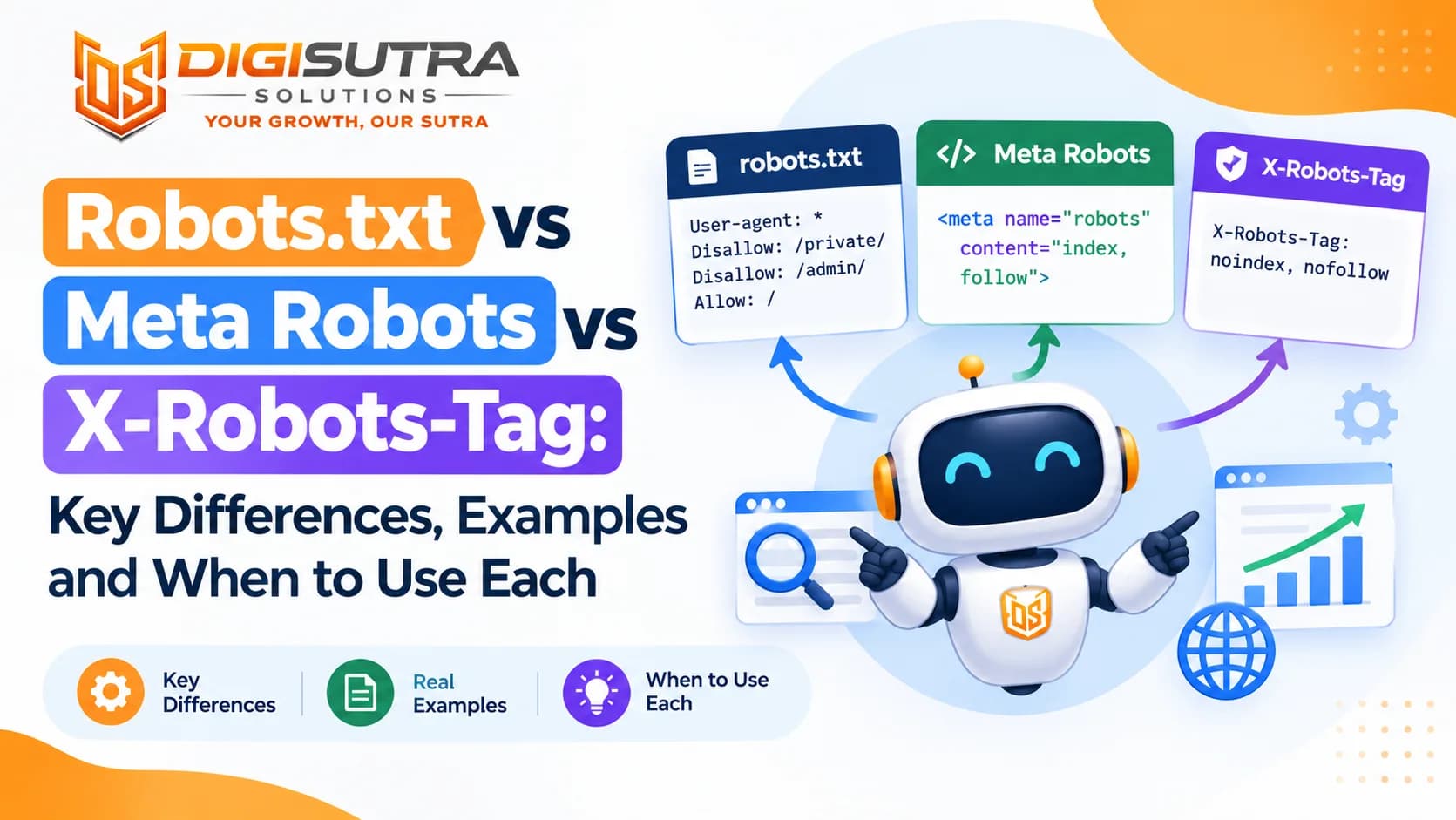
Robots.txt vs Meta Robots vs X-Robots-Tag: Key Differences, Examples and When to Use Each