

Social Media Marketing Strategy Complete Guide for 2026

Harsh Rajput · Sr. SEO Executive · 3 years' experience · 13 August 2026 · Updated 26 August 2026 · 8 min read
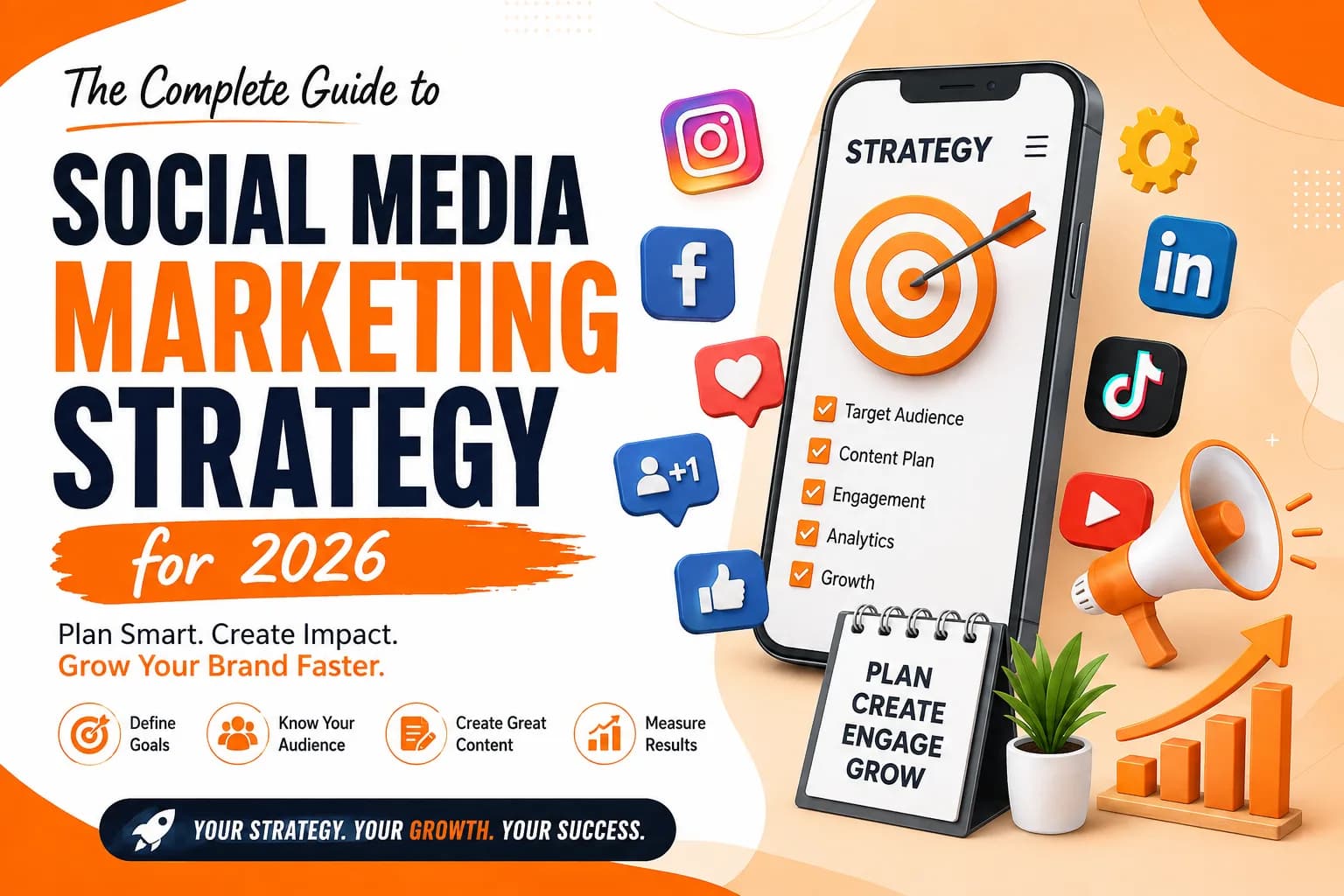
Key takeaways
- It's not complicated.
- A few things have shifted.
- Before planning a single post, figure out your real goal.
- This one gets skipped constantly.
Have you ever posted something on Instagram that barely got any response, while a random post from the week before did really well for no clear reason? That is usually what happens when there is no strategy behind your posting. You end up putting out content without much direction.
We've seen this a lot at Digisutra Solutions. Clients come in after months of posting whatever felt right that day and wonder why nothing sticks. Once there's an actual plan behind it, things change pretty fast. So here's what that plan looks like heading into 2026, no fluff, just what actually works.
So What Even Is a Social Media Strategy
It's not complicated. It's just deciding ahead of time what you are posting, where and why instead of figuring it out on the fly every morning. Sounds simple but most brands skip this part entirely.
Brands that plan tend to grow steadily. Brands that do not end up chasing whatever trend is popular that week even when it has zero connection to what they actually sell.
Why 2026 Is a Bit Different
A few things have shifted. Algorithms now favor accounts that post regularly over ones that post rarely but "perfectly." People have also gotten really good at spotting content that was clearly typed out by an AI tool and dumped online without a second look. Ad costs are up too, so wasted spend hurts more than it used to.
None of this means starting from scratch. It just means the old approach of posting randomly and hoping for the best doesn't really cut it anymore.
Start With What You Actually Want
Before planning a single post, figure out your real goal. Not the goal that sounds impressive in a meeting, the one you actually care about.
Most brands right now are after one or two of these:
- People recognizing the brand when they see it somewhere
- Steady traffic coming to the website
- Actual leads, not just comments and likes
- A community that sticks around long term
- Sales happening directly through the platform
Pick two maybe three at most. Going after all five at once usually means none of them get the attention they need.
Know Who You're Actually Talking To
This one gets skipped constantly. Businesses assume they know their audience just because they run the company. Sometimes that's true. A lot of times it's not.
Spend some real time figuring out:
- Roughly what age group makes up most of your audience
- What problem they're dealing with that you actually solve
- Where they spend time online, and it's probably not everywhere
- What kind of post actually makes them stop scrolling
People can tell the difference between a brand talking to everyone and one talking specifically to them. The second kind wins, every time.
You Don't Need Every Platform
Spreading yourself across six platforms usually means you end up average on every single one. Picking two or three and actually putting real effort there works out better almost every time.
Here's roughly how the platforms stack up right now. Instagram and TikTok are still where most people go for short video content. YouTube Shorts has been steadily pulling in more viewers month after month. LinkedIn is worth the time if your customers are other businesses or working professionals. Facebook still delivers solid results too, mainly with local audiences and an older crowd.
The real question is where your audience already spends their time, not which platform your competitor happens to be posting on.
Content That People Actually Stop For
This is where most of the effort should go honestly, and it ties closely into content marketing as a whole, not just social posts. Quick and useful tends to beat long and polished, at least right now.
Formats doing well:
- Short videos, ideally under a minute
- Raw behind the scenes stuff that isn't overly staged
- Quick tips that teach something in under thirty seconds
- Real customer content instead of scripted testimonials
- Polls and questions people can quickly respond to
- The occasional live session where people can ask things directly
Mix it up. Nobody wants to scroll through ten posts that all feel identical.
Show Up Even When It's Not Perfect
Waiting for the perfect post is a trap. Meanwhile some competitor posts something rough but honest three times a week and just pulls ahead while you're still editing.
A basic content calendar helps, even just a simple spreadsheet works fine. Batch a few posts together when you've got free time instead of scrambling daily. Pay attention to which days and times get better response and lean into that instead of guessing.
Content that never gets posted because it's "not ready yet" does absolutely nothing for the brand.
Use AI, Don't Let It Take Over
AI tools genuinely help speed things up, and if you want to go further, proper AI automation can handle a lot of the repetitive stuff behind the scenes too. Drafting captions, brainstorming ideas, digging through performance data, all fine.
Where it goes wrong is when brands let AI write the final version and just post it as is. People notice. It reads flat, sounds like fifty other brands saying the same thing, and doesn't really land. Use it to save time on the boring parts. Keep the actual personality human.
Half the Job Is Just Talking to People
Posting is only one side of it. The other side is actually engaging with whoever shows up in the comments or DMs.
That means replying like an actual person instead of copy pasting the same response everywhere, answering DMs even for quick random questions, commenting on other accounts in your space, and starting conversations instead of only announcing things.
Fifteen minutes a day on this adds up more than people expect.
Check Your Numbers, Actually Check Them
You won't know what's working unless you look. Every platform gives free insights so there's really no excuse.
Depending on what you are chasing keep an eye on reach if awareness matters most, engagement rate if you want to know how much people actually interact, click through rate if traffic is the goal and conversions if you care about leads or sales.
Follower count looks nice but it does not really tell you much on its own. Focus on whatever number actually connects to your goal.
Things Change, So Check In Monthly
What worked in January might completely flop by March. That's just how this stuff moves.
A quick monthly check usually looks like this. Look at what performed best that month. Notice any pattern, maybe it's the format or maybe it's the timing. Do more of what is clearly working and drop whatever is not. Try one new thing each month just to keep learning.
Staying flexible beats sticking to a plan that quietly stopped working two months ago.
Build Something People Actually Care About
Followers are just a number until they turn into an actual community and that only happens when people feel like there is a real brand behind the posts not some content machine on autopilot.
Ask genuine questions in captions instead of generic ones. Repost customers when they tag you and actually credit them. Reply like a human, not a script. Share stuff that lines up with what your audience actually cares about not just what is trending.
This is the part that turns casual followers into people who recommend you without being asked.
Should You Also Run Paid Ads
Organic reach has gotten tougher, that's just reality at this point. Most solid strategies these days pair organic content with some amount of paid promotion, usually through performance marketing on Meta and other platforms.
Start small and test before scaling anything. Try a few different audiences and formats before putting real budget behind one. Only scale once something is clearly working, not before. And honestly, boosting your best organic post often works better than building a fresh ad from scratch.
Questions People Usually Ask
What matters most in a strategy like this?
Knowing your audience. Everything else, the platforms, the content, the timing, all depends on getting this part right first.
How often should I actually post?
There's no magic number here honestly. What matters more is picking something you can realistically keep up for months, not just two weeks before burning out.
Do small businesses really need all this?
Probably more than bigger brands do. Smaller businesses have less room to waste time and budget on content that goes nowhere.
Wrapping Up
A decent social media strategy for 2026 really comes down to knowing your goals, actually understanding your audience, showing up consistently, and paying attention to what's working instead of guessing. None of this is rocket science. It just takes some patience.
Platforms will keep changing and new formats will keep showing up, but these basics tend to stick around. This guide came together based on what the team at Digisutra Solutions has actually seen work across different brands and industries. Follow it step by step and social media should start feeling a lot less like guesswork.
About the author
Sr. SEO Executive · 3 years' experience
Harsh Rajput is a Senior SEO Executive with 3+ years of experience in SEO, digital marketing and AEO/GEO strategy. He leads a team of SEO executives at Digisutra Solutions, handling keyword research, technical SEO, on-page/off-page optimization, link building and content strategy, while helping brands rank in Google AI Overviews and LLM platforms like ChatGPT, Claude and Gemini. He has worked with clients across India, USA, UAE, and Australia in industries like e-commerce, finance and technology.
Reader reviews
Up next · SEO & AI search · 20 min
Google Latest SEO Updates October 2026: What Changed and What to Do

Related · AI automation · 20 min
AI Project Planning: How to Scope an AI Project Before Writing Code